First recording session Abbey Road

By Frans de Rond – Recording Engineer at Sound Liaison

For many years now, I have chosen to combine two worlds that at first may seem contradictory: digital recording and analog mixing.

It is not because I believe analog is always better than digital. Far from it. Digital recording has brought us enormous advantages, and today we record our Sound Liaison sessions in DSD256, a format I find extraordinary in its ability to capture a musical performance.
But somewhere between capturing that performance and creating the final master, I believe something can easily get lost.
And that is where this story begins.

From Analog Tape to the Digital Studio

In the late ’80s and early ’90s, the studio world moved rapidly from analog tape to digital recording. There were obvious practical reasons. Tape machines were expensive to purchase and maintain, tape itself was costly, and digital recording removed tape noise from the equation.

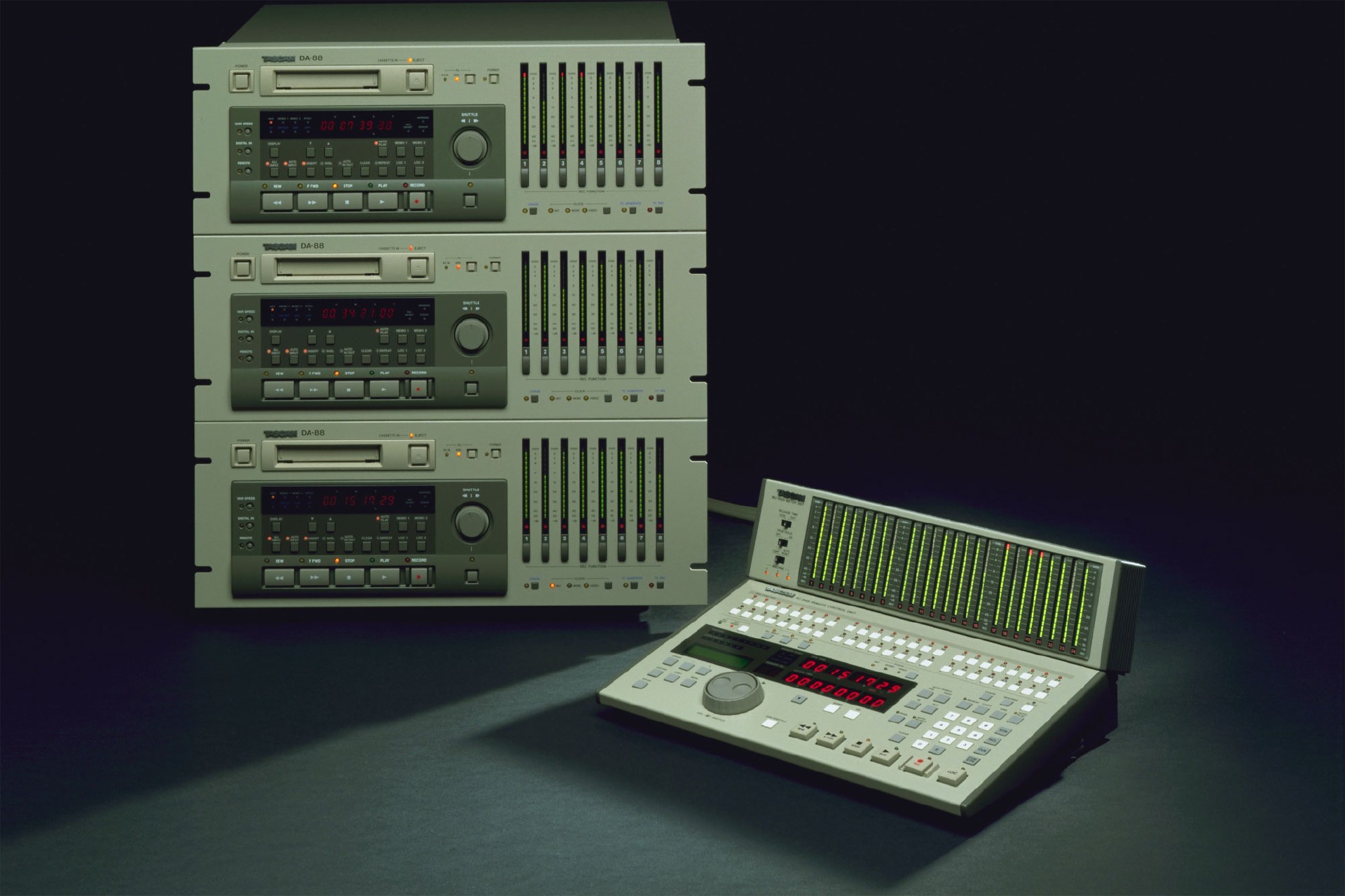
Tascam DA-88 in the studio
Tascam DA-88 in a 24-track setup

For pop music, tape hiss was perhaps not always a major issue. But with jazz and classical music, where dynamics can be wide and silence is part of the music, the lower noise floor was a major advantage.

My first digital workstation was a four-track Pro Tools system. We used it mainly for mastering and relatively simple projects, but the editing possibilities alone were revolutionary. Soon, eight-track digital recorders appeared. By synchronizing several machines, we could build a 24-track digital recording system. The first converters were certainly not perfect, but technology moved quickly. Converters improved, computers became more powerful, and eventually complete multitrack productions could take place inside the computer.

Then came the plug-in revolution.

When Everything Became Possible

As CPU power increased, so did our possibilities. EQs, compressors, reverbs, tape machines and complete mixing consoles could suddenly be recreated as software. Interestingly, one of the main goals of many plug-in designers was, and still is, to imitate analog equipment as accurately as possible. Even the user interfaces often look exactly like the original hardware.

Today, hundreds of plug-ins can be used within a single mix. But I believe there is a potential trap here.

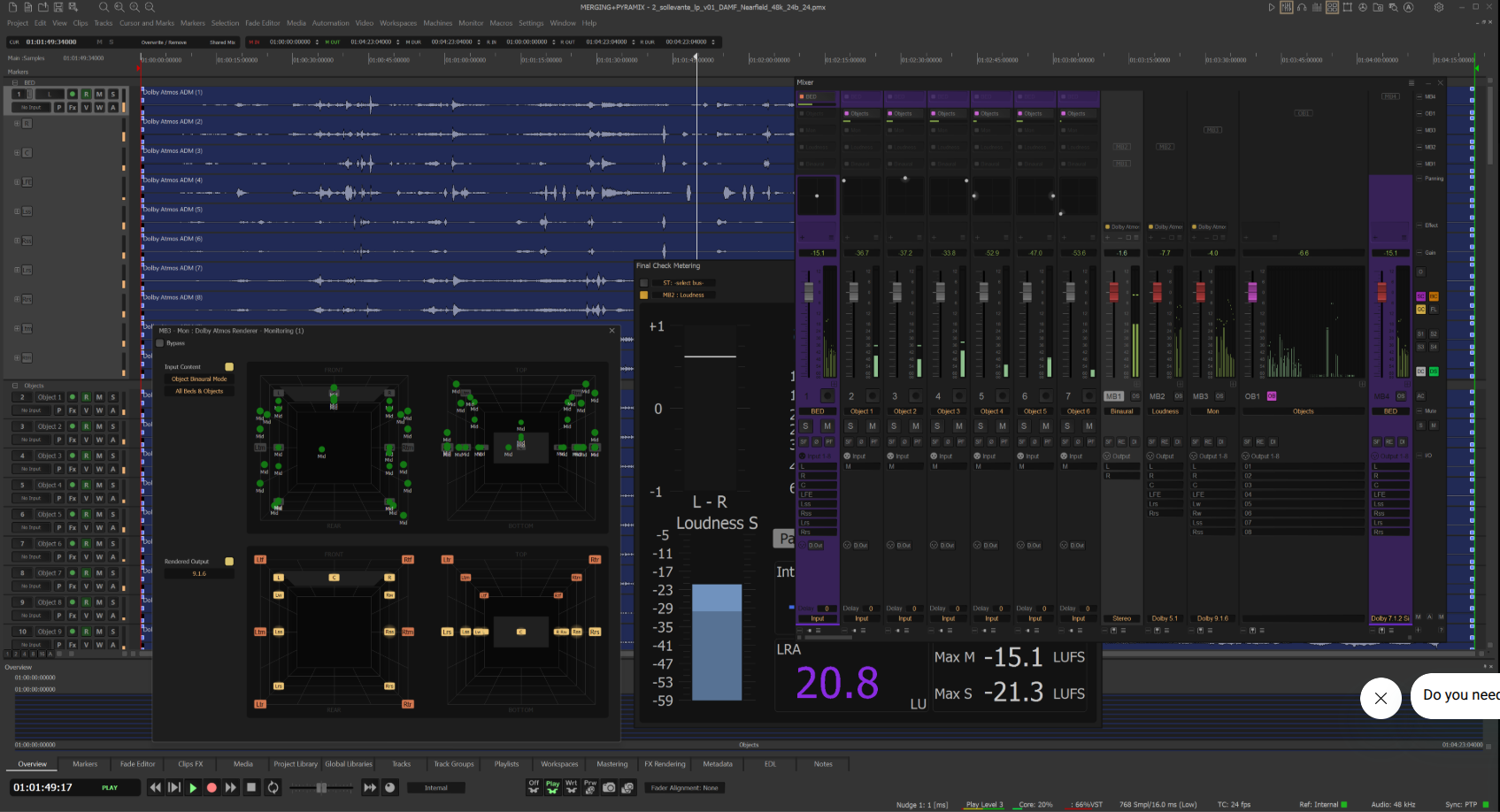
Modern workstation (In the box)

When we insert a plug-in, we tend to focus on the problem we want it to solve. Perhaps we want to control a resonance, shape a transient or compress the dynamics. We listen closely to whether the plug-in solves that particular problem. But do we listen equally carefully to what it takes away?

In my experience, every processing decision can affect something from the original signal: a little openness, immediacy, depth or liveliness. Do this repeatedly across many channels and the result can become a kind of two-dimensional digital representation of the original recording.
At first listen, the mix may sound excellent. Everything is controlled, polished and in the right place. But somehow, the soul has disappeared.

And with it, that wonderful goosebumps moment.

Looking Back to Move Forward

This made me think about recordings from the 1950s and 60s. Why can so many of them still sound incredibly convincing today?

The engineers had relatively few tools. Good microphones, a great room, a high-quality analog console, perhaps some EQ, compression and reverb, and a tape machine. That was basically it. Today we use digital technology to imitate those same devices, but sometimes stack many more instances than would ever have been available (or desirable) in those days. Perhaps, in our search for unlimited control, we have forgotten something about simplicity.

I also wonder whether a new digital reference has developed among younger generations of engineers. If most of your experience comes from working inside a DAW, that becomes your reference for how recorded music should sound. The purity and immediacy of a simple, high-quality analog signal path may no longer be part of that reference.

So I decided to go back to basics.

Back to the Analog Console

After editing and preparing a recording digitally, at Sound Liaison we send the individual tracks through D/A converters (Merging) to an analog mixing console (Studer 961). From there, the workflow becomes remarkably simple.
I can use the EQ on the console, often limited compared with a modern plug-in, but extremely musical. If needed, I can insert an analog compressor on a channel. I create the balance and send the instruments to a high-quality external reverb processor, such as a Lexicon or TC Electronic unit. Finally, the complete mix can be gently shaped with a master-bus EQ or compressor. And that's basically it.

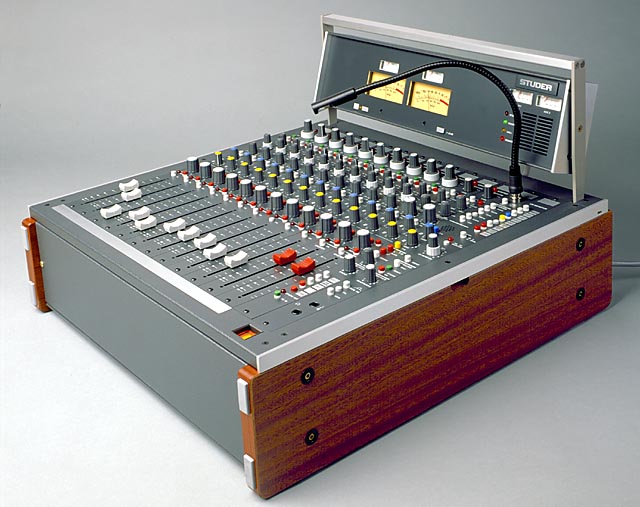
Studer 961 mixing console

Studer 961 vintage mixing console

The interesting thing happens the moment I open the faders. Instead of looking at waveforms, curves, plug-ins and parameters, I start listening and reacting. EQ decisions become intuitive. Balance becomes intuitive. You stop trying to perfect individual components and start listening to the music as a whole. And very often, that is when the goosebumps return.

This is certainly not only my experience. Musicians react immediately when they hear their music through the analog mix. Several have described it in almost exactly the same way: in the analog domain, they recognize the reality of their instrument. In an in-the-box (computer only) mix, it can sometimes feel more like an image of their instrument.

That distinction fascinates me.

DSD256 Changed the Equation Again

Since we started recording in DSD256, this approach has moved to another level.
The transparency and natural quality of DSD256 make the starting point even more important. And that has reinforced something else we increasingly believe at Sound Liaison: the better the recording, the less you need to do afterwards.

The acoustics of the room matter. The microphone matters. But above all, microphone placement matters. “We'll fix it in the mix” is simply not the philosophy. Get the sound right at the source, preserve as much of it as possible, and use technology only where it contributes to the music.

For Sound Liaison recordings, this has now become our preferred workflow: record in DSD256, mix in the analog domain, and capture the final mix back into DSD256 for the master. Yes, this requires D/A and A/D conversion. In theory, one could argue that staying entirely in the digital domain avoids those conversion stages. But to my ears, whatever theoretical loss those conversions may introduce is more than compensated for by what happens when the music passes through a great analog mixing environment.

The result simply feels more real.

The Final Step

Recently, I added HQPlayer 4 Pro software to our workflow. Developed by Jussi Laako, it is now used for the final mastering and conversion stage before our masters are prepared in the different formats we offer.

I am still exploring its possibilities, so I will save that subject for another blog. There is certainly enough to talk about.

For me, the lesson after all these years is surprisingly simple. Technology should never become the goal. Whether we use DSD256, an analog console, a great EQ or sophisticated conversion software, these are all tools.
The goal is to preserve the connection between the musician and the listener.
And when I open those analog faders and suddenly feel that connection again, I know why I still choose this hybrid workflow.

What about you? What are your thoughts on analog and digital, whether in recording, mixing or simply listening to music?
I’d love to hear your experiences and perspective.

I would love to hear your thoughts at This email address is being protected from spambots. You need JavaScript enabled to view it..

Frans
Recording Engineer
Sound Liaison

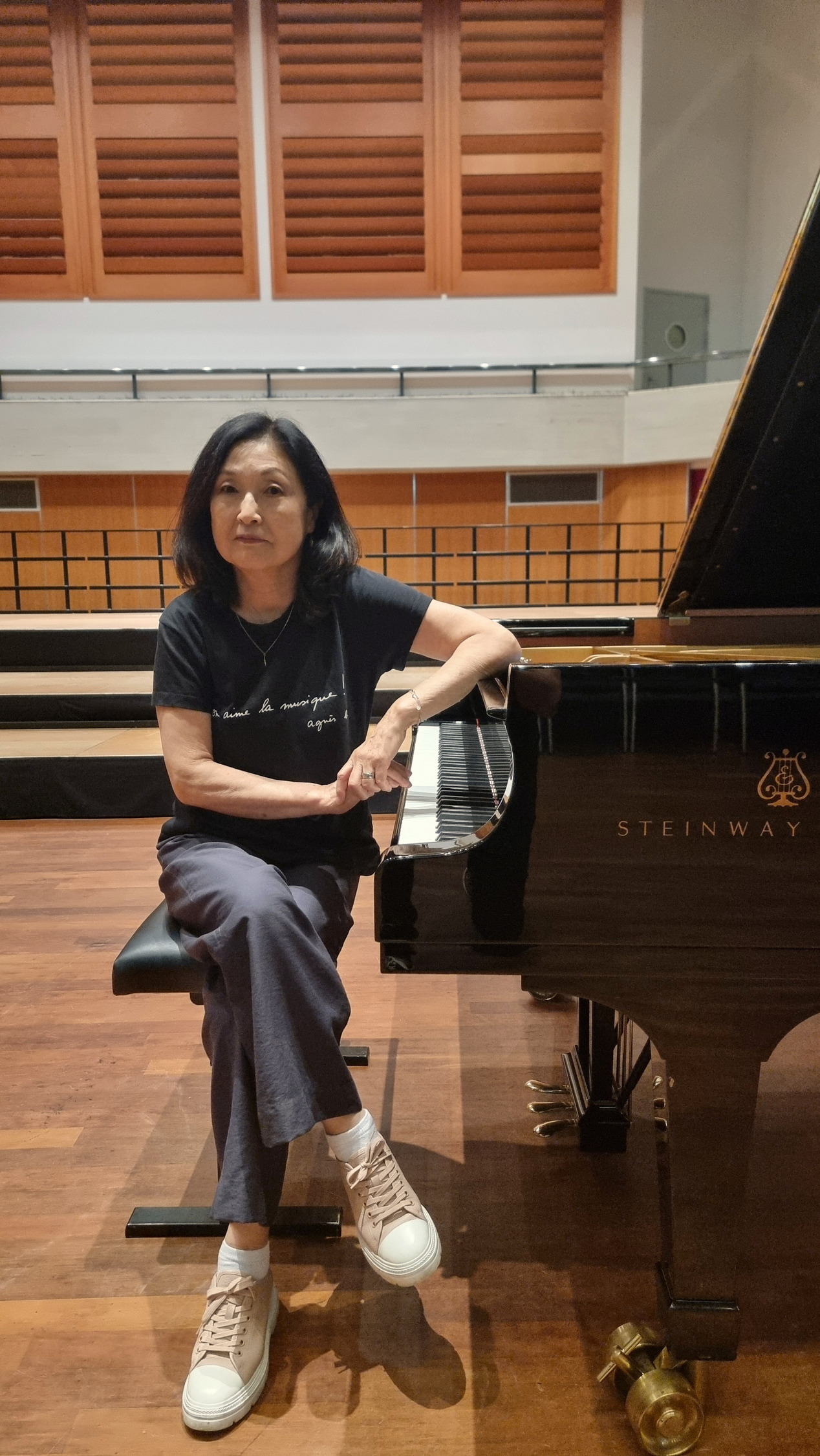
Atzko Kohashi recording solo album at Studio 1 Heuvellaan Hilversum

By Frans de Rond, Senior Recording Engineer at Sound Liaison

Whenever I start a new recording session, I am always a little nervous.
Can I create an atmosphere in which the musicians feel comfortable enough to perform at their very best? Will we make a recording that everyone involved will look back on with pleasure?  And can I create a sound that both the musicians and we at Sound Liaison believe in?

For me, these questions are far more important than which microphone or preamp I am going to use.
A recording starts with communication. Before a session, I want to know what the musicians are planning to record, what repertoire they have chosen, and what they want to express through the music. But I also want to get to know the musicians themselves. What kind of music do they listen to? What sort of sound do they like? What do they expect from a recording?

By the time we enter the studio, I usually already have a sound in my head. Not a fixed recipe, but an idea of how I would like the recording to feel. Hopefully, it is a sound that represents the musicians and their music.

And there is another person in the room, even though they are not physically there: the listener at home.
Ultimately, that is who we are making the recording for. We want to bring the performance into your listening room in the most beautiful and inspiring way possible. At that point, it is no longer about microphones, converters, sample rates or cables. It is about emotion.

I see recording technology as a set of tools, a carrier that allows us to transport the emotion of a performance from the studio to your home.

Turning an Idea into Sound


The sound I have in mind determines my choice of microphones and their placement.
No microphone is perfect for everything. You have to get to know a microphone, just as you get to know an instrument. When does it shine? On which instrument? At what distance? In which room?
Do I use an omnidirectional microphone, with its extended low-frequency response and ability to capture the acoustic environment? Or do I choose a cardioid, giving me more directionality, separation and focus?

And what about stereo? An XY pair can give excellent localisation and mono compatibility. Spaced omnis in an AB configuration can create wonderful openness, depth and a sense of space. ORTF, with its combination of level and timing differences, can provide a very natural stereo image.
Or perhaps stereo is not what the instrument needs at all. Sometimes a mono microphone, creating a clear point source within the soundstage, is exactly right.

Then there is distance.
Move a microphone closer and the sound usually becomes more intimate and direct. But you are also listening to a smaller physical part of the instrument. A grand piano, for example, is not one sound source. Different parts of the soundboard and strings radiate different frequencies and harmonics. Close to the instrument, these elements have not yet fully blended acoustically. Moving the microphones further away allows those components to integrate more naturally before reaching the microphones.

But distance also means more room.

And that brings us to one of the most important aspects of recording: every choice is a compromise.

Atzko Kohashi recording solo album at Studio 1 Heuvellaan Hilversum

Atzko Kohashi - a Steinway D and Studio 1

Today I recorded pianist Atzko Kohashi in the large Studio 1 at Heuvellaan in Hilversum. It was a solo piano session and a follow-up to her first solo album, Soul Eyes. Atzko was playing the Steinway D concert grand, a magnificent instrument that adds another dimension to the recording. A great piano in a great room sounds wonderful before you have placed a single microphone.

But that does not necessarily make the choices easier.
Studio 1 has a beautiful acoustic, and naturally I want to capture some of that space. The temptation is to move the microphones further into the room and let the hall become part of the sound.
But the more room you introduce, the more you risk losing intimacy.

With Atzko, intimacy is essential. As a listener, I want you to become aware of how she touches the instrument, how a note develops, and how one phrase flows into the next. I want you to feel close enough to follow her musical thoughts as they happen.
And I know Atzko likes that intimacy too.
If I place the microphones too far away and the piano starts to feel distant, I can almost see from her face that I need to make an adjustment.

So we listen. We move the microphones. We listen again.
A little closer.
A slightly different position.
And then, suddenly, we are there.

In the end, my trusted Josephson C700S disappeared under the lid once again. It brought us close enough to the Steinway to create the feeling that you are sitting near the instrument, and, more importantly, near Atzko and her performance.

Of course, I could not resist placing an additional pair of microphones further out in Studio 1. The room is simply too beautiful to ignore completely. Whether I will actually use them is another decision for later.

Perhaps that is the essence of making choices during a recording session.
You need technical knowledge and experience. You need to understand microphones, polar patterns, acoustics and instruments. But then you have to stop thinking about the technology and start listening to what it does to the music.

Less is often more.

And when the sound allows you to forget about the recording and simply listen to the musician, you know you have made the right choice.

Frans

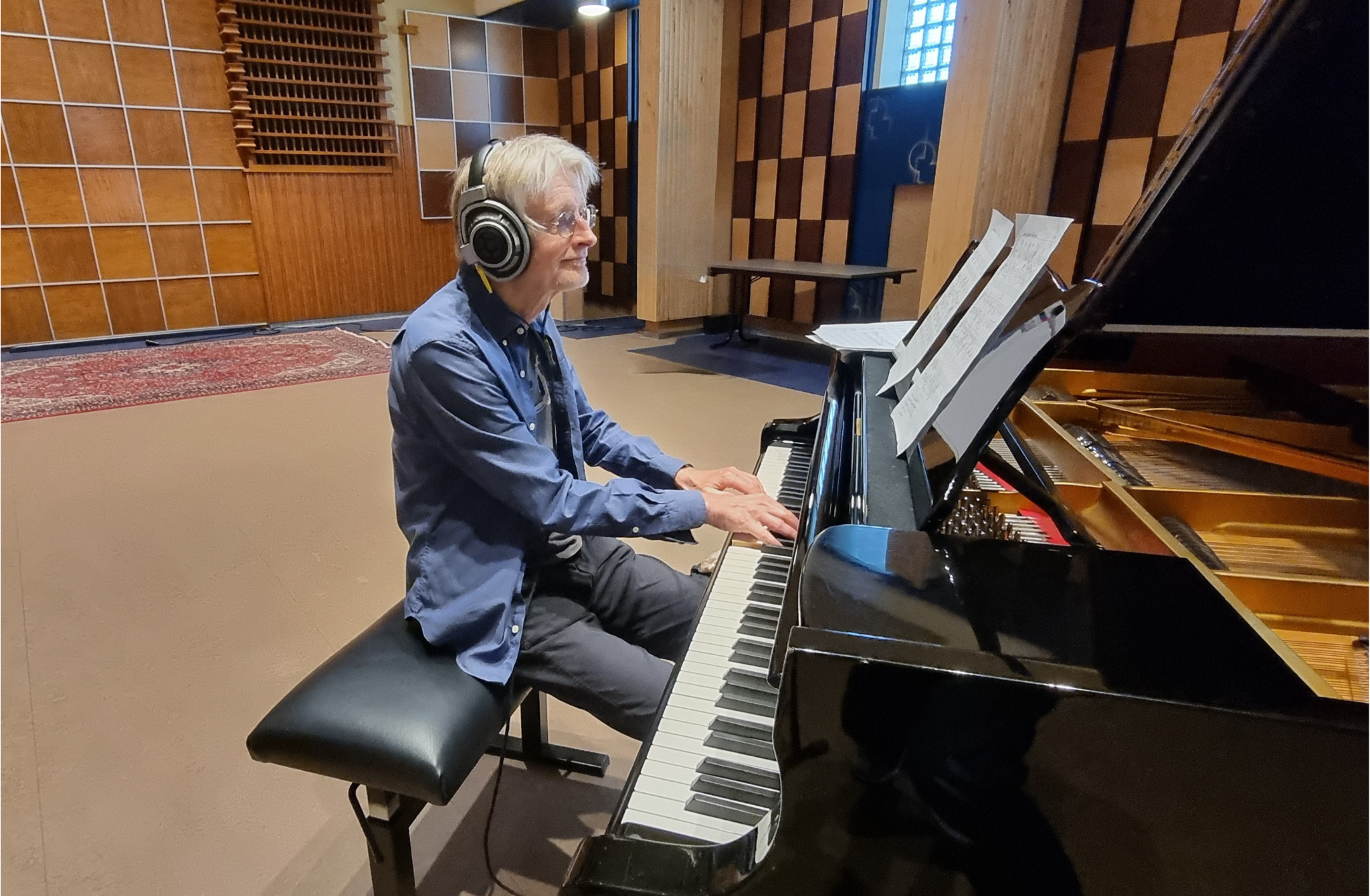
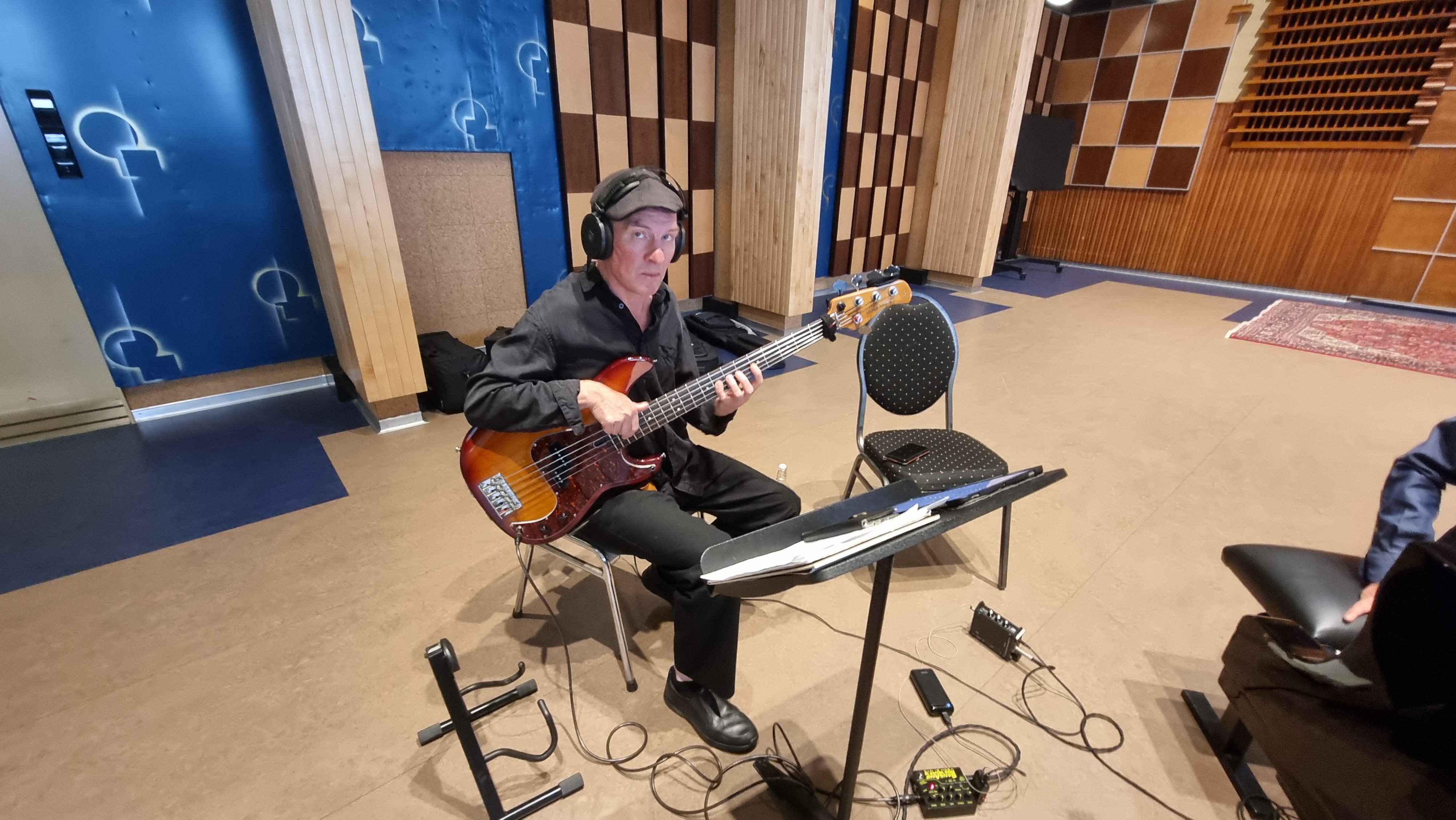
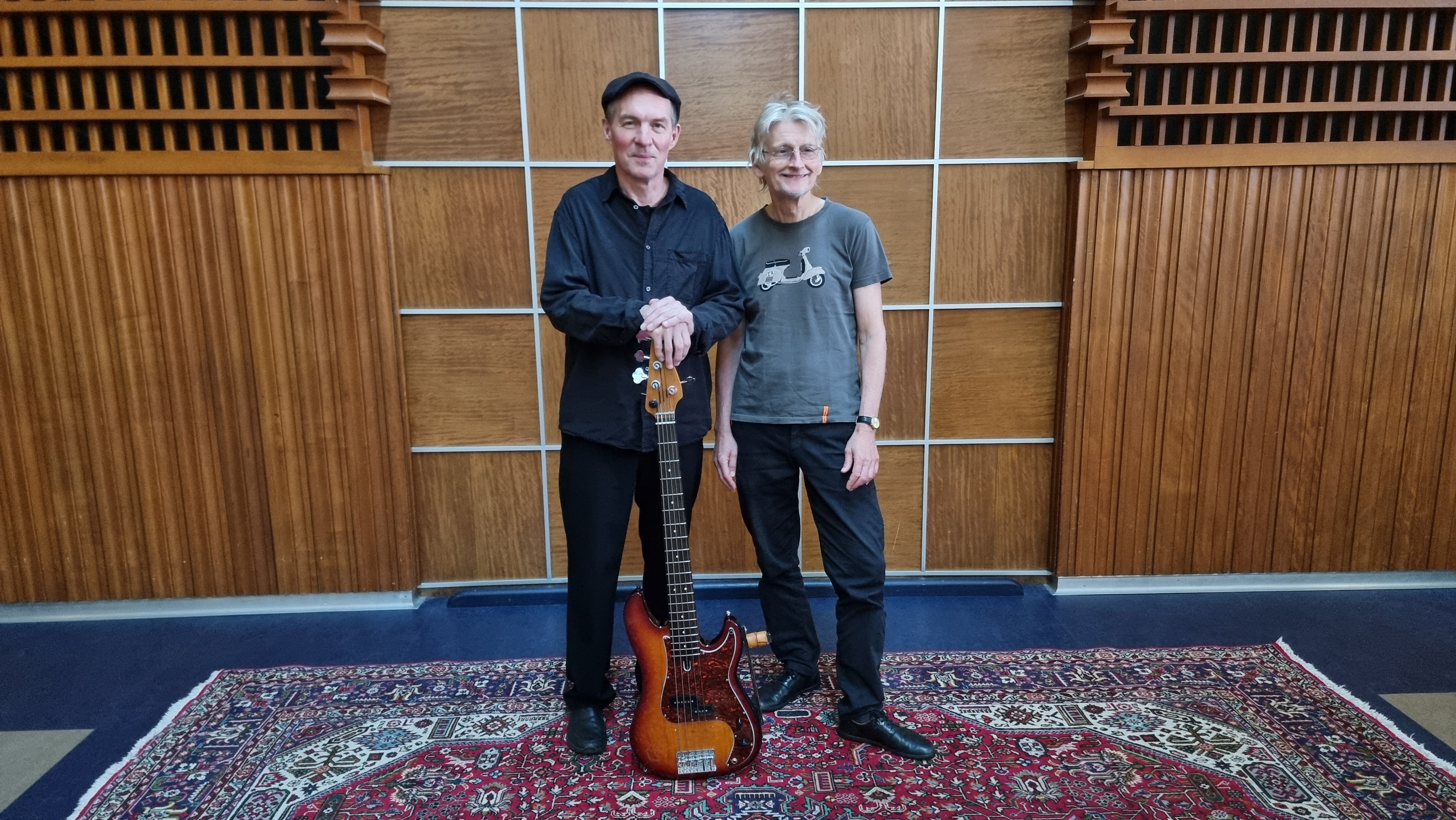
Recording session for Sound Liaison with Cajan Witmer andPeter Bjornild. A One-Mic Recording in DSD256 format

Some recording sessions remind me why I became an engineer in the first place. This session with pianist Cajan Witmer and bassist Peter Bjørnild was one of those mornings where every decision was guided by a single question: how can we capture the performance as truthfully as possible?

On a quiet Wednesday morning we had Studio 2 at our disposal. The grand piano had just been tuned, the room was silent, and everything was ready before the musicians arrived. From the technical perspective, the concept of this recording was built around two simple principles.

Recording session for Sound Liaison with Cajan Witmer and Peter Bjornild. A One-Mic Recording in DSD256 format

The first was the piano. Instead of using multiple microphones, we recorded the entire instrument with a single Josephson C700S stereo microphone. Over the years we have become increasingly convinced that this approach delivers something special. By avoiding the usual collection of closely spaced microphones, we also avoid many of the time-alignment and phase issues that inevitably come with them. The result is remarkably coherent. Listening back, it feels as if the piano is simply standing in front of you, and you are witnessing the performance rather than listening to a recording.

Peter played a P-bass on this session. We decided to capture his sound directly through a high-quality DI. We experimented with adding a bass amplifier, but in this particular case it contributed very little. The direct signal had the clarity, warmth and definition we were looking for, so we stayed with the simpler solution.

Finding the right microphone position took a little time. We moved the C700S forwards and backwards several times until the perspective felt just right. Our monitoring system, the LX521 "The Reference," makes these decisions surprisingly straightforward. It tells you immediately when the distance feels natural and when the recording starts to breathe.

From the beginning we had imagined the soundstage with the bass slightly to the left and the grand piano to the right. With a one-point stereo microphone there is another important consideration. If you want the listener to almost "see" the hammers striking the strings, the piano has to be positioned with the keyboard facing away from the microphone. That naturally places the instrument on the right-hand side of the stereo image, exactly where we wanted it.

Another conscious decision was to leave the room untouched. We often bring in acoustic gobos to make the studio slightly drier, but this time we chose not to manipulate the acoustics at all. We wanted to hear Studio 2 exactly as it is: neutral, open and honest. Sometimes the best engineering decision is simply to leave well enough alone.

Everything was recorded in Pure DSD256 using Pyramix. Both the Josephson microphone and the DI signal remained in the DSD domain throughout the entire recording and mixing process. The recorded tracks left Pyramix one-to-one through a D/A converter into the analogue mixing chain. At no point was the audio converted to PCM.

Recording session for Sound Liaison with Cajan Witmer and Peter Bjornild. A One-Mic Recording in DSD256 format

Ever since we experienced that unmistakable goosebump feeling with DSD256 recordings, it has become very difficult to work any other way. The sonic rewards are obvious, but there is also a discipline that comes with it. Unlike a PCM workflow, you cannot rely on plug-ins, EQs or compressors after the fact. Most of those decisions have to be made in the analogue domain before the recording is finished.

For me as an engineer, and I suspect for the musicians too, this changes how you approach the session itself. You go in more deliberately, because there is no "we'll fix it in the mix." If something isn't right, you move the microphone. You don't reach for an EQ curve or a touch of reverb to paper over it.

I think that discipline is audible in this recording. There's a calm to it, a settledness, that I believe only comes from one stereo microphone (plus a bit of DI), and a session recorded and mixed, in analog, entirely in DSD256.

Recording session for Sound Liaison with Cajan Witmer and Peter Bjornild. A One-Mic Recording in DSD256 format

Visit Sound Liaison and give it a listen. The album will be available in autumn 2026.

Recording session with Atzko Kohashi & Eddy Koopman - Sketches of Seasons with producer Harry van Dalen in the background

Some recording sessions stay with you forever. Not because everything went according to plan, but because every person involved shared the same vision: to capture something genuine. Recording Sketches of Seasons with pianist Atzko Kohashi and percussionist Eddy Koopman was one of those rare experiences.

The project was initiated by producer Harry van Dalen, whose vision was beautifully simple: make the purest recording possible. No unnecessary processing, no technical tricks, no artificial enhancement. Just outstanding musicians, an exceptional acoustic environment, and a recording chain capable of preserving every subtle musical nuance.

Sometimes the most ambitious productions are built on the simplest ideas.

To push that philosophy even further, we incorporated an extraordinary collection of ultra-high-end audio equipment into the recording chain. Premium cables, carefully optimized power supplies, and Schnerzinger technology were all part of the setup. Schnerzinger products are designed to reduce electromagnetic interference around audio equipment, creating an electrically quieter environment that allows the recording chain to perform at its absolute best. Whether one approaches this from a purely technical or listening perspective, our goal was clear: remove every possible obstacle between the musicians and the microphones. (Schnerzinger)

Eddy Koopman during recording session of Sketches of Seasons with Atzko Kohashi for Sound Liaison

Before a single note could be recorded, an enormous collection of percussion instruments had to be carried into Studio 2. Drum after drum, cymbals, bells, wooden instruments, gongs, shakers, everything imaginable found its place. Unfortunately, one beautiful ceramic percussion instrument did not survive the journey and shattered before the recording even began. A painful loss, but fortunately Eddy's collection was vast enough to continue.

Once everything was assembled, the percussion setup became an impressive circle of instruments covering virtually the entire audible spectrum, from the deepest bass drum to shimmering cymbals and delicate high-frequency percussion. Every instrument was positioned within easy reach, allowing Eddy to move effortlessly through an extraordinary palette of colors.

The recording setup itself was remarkably straightforward.

The Steinway grand piano was positioned with its lid opening towards the percussion, allowing the sound of both instruments to blend naturally in the recording. We recorded the piano with a single Josephson C700S microphone. The percussion setup was centered around another Josephson C700S, supported by a widely spaced pair of omni microphones to capture the complete soundstage and natural balance of the instrument circle. Two discreet spot microphones provided only gentle support where needed, but what you predominantly hear on the album is the natural stereo image created by the Josephson microphone and the pair of omnis. The philosophy remained unchanged throughout the session: less is more.

Atzko Kohashi during recording session for Sound Liaison - Sketches of Seasons

Musically, the concept revolved around the four seasons.

Atzko and Eddy had prepared a musical atmosphere for Spring, Summer, Autumn and Winter, but beyond those starting points there was enormous freedom for improvisation. That made every take exciting, even for us in the control room. None of us knew exactly where the music would go.

One of the greatest recording challenges came from Eddy's astonishing dynamic range. His entire percussion performance is played exclusively with his hands, producing an incredibly expressive and organic sound. Within seconds he could move from the faintest whisper on a cymbal to the overwhelming impact of a large bass drum. Combined with an instrument collection spanning almost the entire frequency spectrum, careful gain staging became absolutely essential.

Studio 2 played an equally important role.

Its acoustics allow sound to breathe. Instead of early reflections dominating the recording, the room gives every instrument the space to fully develop before the ambience gently surrounds it. You don't simply hear the percussion, you experience the air moving around it. That natural acoustic space became an invisible third musician during the session.

Perhaps that is what made this recording so memorable.

Atzko shapes every phrase with remarkable sensitivity, while Eddy responds instinctively with rhythm, texture and colour. Both musicians literally create music with their hands, directly from the heart and entirely in the moment. There was a beautiful interaction not only between the performers themselves, but also between the musicians and the recording team.

Harry van Dalen knew exactly what emotional result he wanted to achieve and challenged Michael van Polen and myself to realize that vision without unnecessary complexity. Simplicity, precision and trust became the guiding principles throughout the day.

After many hours of concentrated work, four remarkable performances had been captured.

Years later, I still encounter Sketches of Seasons at the High End exhibition in Munich, where loudspeaker manufacturers regularly use the album to demonstrate the capabilities of their finest systems. Every time I unexpectedly hear those familiar opening notes coming from another demonstration room, I cannot help but smile.

It reminds me why we make recordings like this.

Not to impress with technology, but to preserve a musical moment so honestly that, years later, it still allows listeners to feel as if they are sitting in the room with the musicians.

That is something I remain deeply proud of, and profoundly grateful to have been part of.

Go to albumpage: https://soundliaison.com/products/atzko-kohashi-eddy-koopman-sketches-of-seasons

By Frans de Rond

Every recording starts with one thing: the music.

At Sound Liaison, our goal has never been to create perfect recordings. Instead, we strive to capture something far more valuable: the essence and emotion of a musical performance. Technology is important, of course, but it should always serve the music, never the other way around.

For us, the journey of a recording begins long before the microphones are placed in the studio. It starts with finding musicians and ensembles that share our philosophy. We are always searching for artists who understand the beauty of acoustic music and who are willing to embrace a recording process that prioritizes honesty, spontaneity, and musical interaction.

Whenever possible, we record with a single stereo microphone. The simplicity of a One Mic recording remains one of the most powerful ways to capture a performance. Not every ensemble is suitable for this approach, however. Some instrument combinations require additional support, and in those cases we carefully complement the main stereo microphone with a limited number of spot microphones. The objective remains the same: preserve the natural balance and interaction of the musicians while maintaining a realistic soundstage.

Preparation is a crucial part of the process. Before entering the studio, we spend considerable time discussing the repertoire and making sure everyone understands what lies ahead. This is particularly important for a pure One Mic recording. The musicians know that the focus is entirely on the performance and the moment itself. There are few opportunities for repair afterwards. No endless editing. No assembling a performance note by note.

Interestingly, this limitation often becomes a strength. The concentration increases. The intention becomes stronger. Everyone listens more carefully. The result is a performance that feels alive because it truly is alive.

Today, we record most of our sessions in DSD256. This format allows us to preserve an extraordinary amount of information and makes the concept of One Band & One Mic even more compelling. The transparency and realism of DSD256 help us capture the subtle details that make acoustic music so engaging.

Once the recording session is finished and everyone is satisfied with the takes, we do something that may seem unusual: we put the project aside for a few weeks.

We do this intentionally.

Immediately after a recording session, musicians often remember every small imperfection, every note they wished they had played differently. By allowing some time to pass, those memories fade. When the listening copies arrive a few weeks later, the musicians can approach the recordings with fresh ears and a more objective perspective. Often they discover that what felt like a mistake during the session actually contributes to the character and authenticity of the performance.

After the band and our producer, Peter Bjørnild, have approved the selected takes, I begin the editing process. Our edits are generally very simple. Think of attaching the coda from Take 3 to Take 2, or replacing a short section with material from another performance.

The majority of each song remains a single continuous take. Sometimes an entire track is exactly as it was performed in the studio. By keeping the editing minimal, we preserve the natural flow and energy of the music. It is remarkably easy to edit the life out of a performance. We try very hard not to.

Once the edits are completed, we schedule a separate mixing session. This separation is important because it allows us to return with fresh ears.

Mix days usually start early in the morning. Our hearing is less fatigued and our judgment tends to be more reliable. Before the musicians arrive, I prepare a mixing setup that gives us a solid starting point. Usually one or two members of the band join the session. Their input can be invaluable, particularly when it comes to artistic intentions, arrangements, or personal preferences.

We aim to complete a mix within one or two days. The musicians then take the mixes home and listen in their own environment. After receiving their feedback, I create the final mix.

At this stage, it is important that the recording carries the Sound Liaison signature. For us, that means an open and dynamic sound with a realistic stage and a natural sense of space. The listener should feel as though the musicians are performing in front of them, not trapped between two loudspeakers.

When the final mix is approved, I move on to mastering. For us, mastering is not about making the music louder. It is about presentation. I determine the final sequence of the tracks, clean up the beginnings and endings, establish the appropriate spacing between pieces, and prepare all metadata and artwork. The goal is to create a seamless listening experience from beginning to end.

Once everything has been approved, the final stage begins: conversion.

The original DSD256 master is sent to Tom Caulfield in the United States. Using state-of-the-art software and an extremely careful workflow, he converts the master into all available delivery formats. When the converted files return, I prepare them for distribution, upload them to our servers, and connect the download links to the products in our webshop.

At that point, the choice is yours.

Will you listen to the original DSD256 master, a true one-to-one copy of what left our studio? Or will you choose a format that better suits your playback system and listening preferences?

Whatever format you select, my goal remains the same. Through every stage of recording, editing, mixing, mastering, and conversion, I try to preserve the emotion, intention, and musical truth that existed in the studio. If that feeling reaches your living room and allows you to connect with the musicians, then the entire journey has been worthwhile.

Enjoy the music.

Frans de Rond
Sound Liaison